In this guide
At a glance
- Size
- Compact shrubs to large trees
- Position
- Usually sun or light shade
- Soil
- Moist, well drained; pH varies by species
- Planting
- Use local seasonal guidance
- Roots
- Avoid unnecessary disturbance
- Flowers
- Frost can damage early blooms
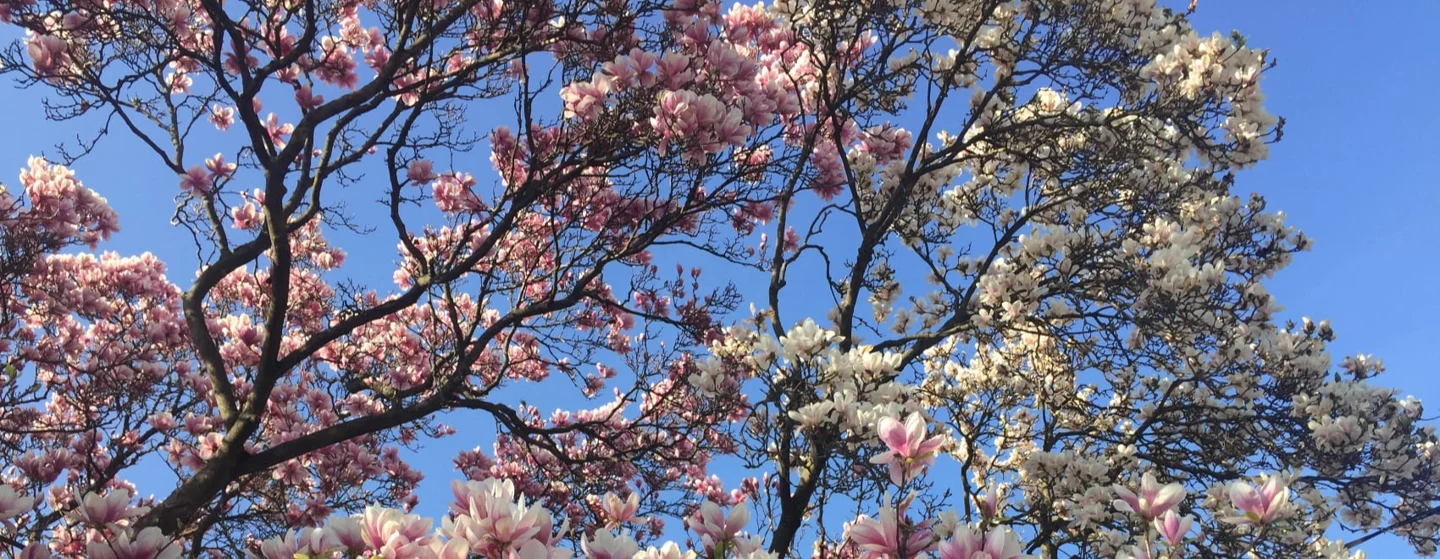
A magnolia can be the moment a garden revolves around: bare branches carrying spring flowers, or an evergreen tree opening large scented blooms above glossy leaves. That effect is worth planning for. It is much less enjoyable when a tree chosen as a small pot begins to outgrow its place beside the house.
Start with the mature plant, not the flower alone. Magnolias range from compact shrubs to substantial trees, and the right choice depends on space, climate and soil. There is no single small-garden magnolia hiding behind the generic name.
Check mature spread as carefully as height
Star magnolias and selected compact cultivars can suit smaller spaces, while saucer magnolias often need the room of a specimen tree. Southern magnolia, Magnolia grandiflora, is evergreen and can become very large; even a cultivar described as compact needs its own measured allowance.
Consider how branches will relate to a path, windows and neighboring planting in ten or twenty years. A tree does not become suitable simply because you intend to prune it constantly. Leave room for the mature canopy and choose a cultivar with the habit you actually want.
Measure the available width on the ground before choosing: the branch spread is easy to underestimate from a young plant.
Choose flowering time for the climate
Early flowers on deciduous magnolias can be damaged by late frost even when the tree itself is hardy. A later-flowering selection may be more useful in a frost-prone garden. A sheltered site helps, but cannot turn an early cultivar into a frost-proof one.
Some magnolias are evergreen and others deciduous; fragrance, flower shape and seasonal timing vary. If possible, see mature examples growing locally. That shows the complete plant and the conditions it succeeds in, rather than only a close-up of the most flattering bloom.
Match the species to the ground
Many magnolias prefer fertile, moisture-retentive but well-drained soil that is slightly acidic or neutral. Some tolerate more alkaline conditions, while others are less accommodating. Test the soil and check the named plant rather than trying to make every site fit a generic pH claim.
Sun or light shade suits many types, with protection from strong, drying winds. Choose the exposure for your climate and cultivar; a compass direction by itself cannot describe the shade from buildings, surrounding trees or a hot wall. Avoid a waterlogged planting site and unnecessary foot traffic over the future root area.
Plant once with the root zone in mind
Choose a suitable local planting season when the ground is workable and conditions allow roots to establish. Water a container-grown plant beforehand. Prepare a broad hole, set the rootball at the correct original level and avoid burying the trunk base beneath extra soil.
Firm gently, water thoroughly and mulch the surrounding ground while keeping the trunk clear. Staking may be appropriate where needed for establishment, but ties and supports should be checked as the tree grows. Do not leave tight ties in place indefinitely.
Magnolia roots benefit from being left undisturbed, so plan nearby planting before digging repeatedly around an established tree.
Water by soil condition, prune with restraint
Check new trees during dry periods for at least their establishment phase. Water enough to reach the rootball and surrounding soil, then allow excess to drain. The required interval changes with rainfall, soil and tree size; a temperature-based calendar of weekly or twice-monthly watering is too crude.
Established magnolias generally need little routine pruning. Remove dead or damaged growth and seek species-specific guidance before substantial cuts. If the tree is becoming far too large, repeatedly shortening branches is a poor substitute for the original site choice.
Yellowing leaves or weak growth deserve a check of moisture, soil and roots before fertilizer is added. A small healthy plant can establish well and develop in time; the largest nursery specimen is not automatically the easiest tree to settle into a garden.
Compare the whole tree before reserving its place
“Small magnolia” is not a sufficient specification for a narrow garden. Compare a named plant's mature spread, foliage and flowering season with the space that will remain after surrounding trees and shrubs grow. The nursery container gives almost no sense of that future relationship.
| Magnolia group | Character worth planning for | A question for your site |
|---|---|---|
| Star magnolia, M. stellata | A deciduous shrub or small tree with early flowers | Can its eventual branching fit without cutting back the flower display every year? |
| Saucer magnolia, M. × soulangeana | Often a broad, spreading deciduous specimen | Is there room for width as well as height, and how frequent are late frosts? |
| Southern magnolia, M. grandiflora | An evergreen tree; cultivars vary substantially in size | Do you want year-round foliage here, and have you checked the exact cultivar? |
| Sweetbay, M. virginiana | Foliage persistence and habit vary with climate | What does it actually do in gardens near you? |
Clemson's South Carolina guide gives star magnolia a potential spread of about 10–15 ft (3–4.6 m), and saucer magnolia about 20–30 ft (6–9 m). These are useful scale comparisons, not a guarantee for every cultivar or climate. A plant described as relatively small can still occupy most of a small border.
Mark the proposed spread on the ground with temporary canes or a hose. Walk the path, open nearby windows and consider the view from indoors. Can branches develop naturally without becoming a recurring obstruction? If the answer depends on routinely removing half the canopy, revisit the choice now.
Early flowers also need a realistic expectation. Clemson notes frost damage on both star and saucer magnolias, with later-flowering selections available. A brown flower after a cold night is not by itself evidence that the whole tree has died. Observe buds, twigs and subsequent leaf growth before making corrective cuts.
For an existing tree, compare the present problem with its history: a single frost-damaged display, a steadily widening canopy or continuing whole-branch decline are different situations. Space planning solves the second; pruning does not repair the first, and the third needs an assessment of tree health rather than cosmetic trimming.
Sources & further reading
This guide draws on horticultural and specialist references. Conditions vary with climate, cultivar, and site.
- RHS: magnolia growing guide
- NC State Extension: southern magnolia
- Clemson Extension: magnolia species and mature dimensions