In this guide
At a glance
- Rattan
- A natural plant material
- Wicker
- A weaving method, not one material
- Check the label
- Natural or synthetic weave; frame and cushion details
- Good habit
- Clean, dry storage and product-specific care
Woven furniture makes an outdoor sitting area feel a little softer. Light catches the texture, a curved arm is easy against planting, and the piece can sit comfortably between a formal terrace and a more relaxed garden. The look, however, tells you very little about how it will tolerate the weather.
Rattan-style furniture may be natural cane or a synthetic weave over a separate frame. Those materials need different care. Identify the construction before deciding that a set can remain outdoors through winter or that one coat of a generic treatment will protect it.
Separate the plant from the weave
Rattan is a natural material derived from climbing palms. Wicker describes a way of weaving; the strands may be rattan, another natural material, or a synthetic substitute. Bamboo is different again. A furniture description that uses all three words loosely deserves a closer look.
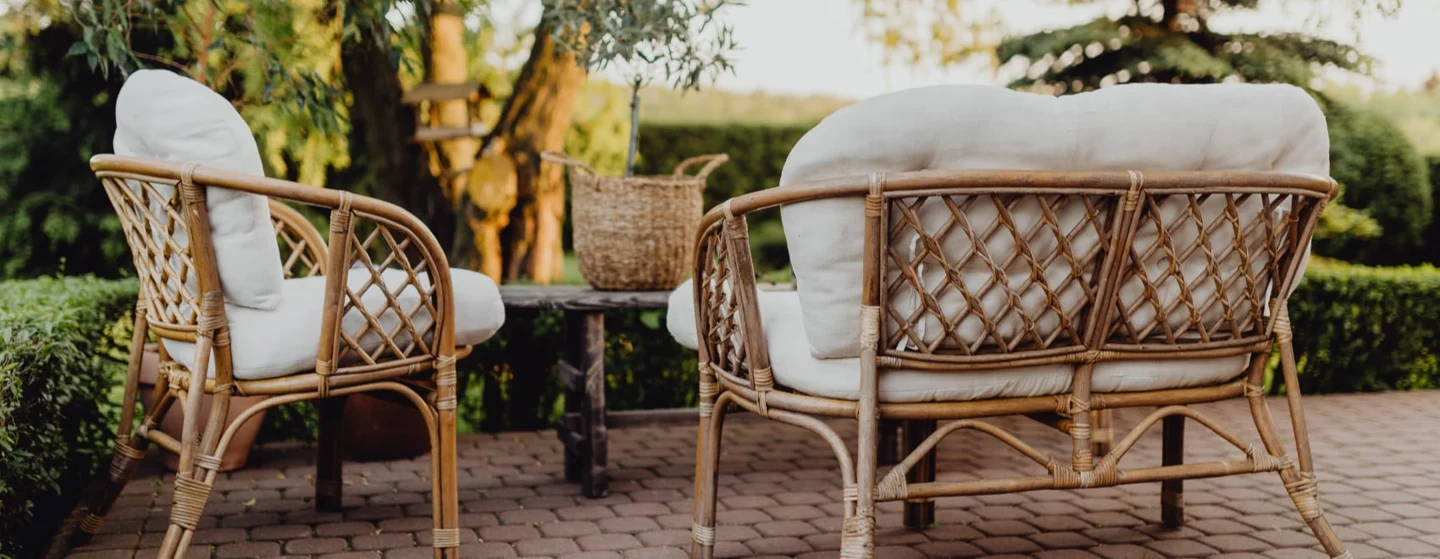
Synthetic woven furniture is often designed for outdoor use, but its performance depends on the strands, frame, joints, finish, and complete product specification. Natural rattan should not be assumed to tolerate persistent rain just because it appears in a photograph of a terrace.
Look for clear statements about the intended location and seasonal care. If the material is not identified, ask before buying or applying a maintenance product. A good-looking weave can conceal a frame or connection that has very different requirements.
Choose the seating arrangement before the set
Measure the terrace with chairs pulled out and people moving through. A corner sofa can offer generous seating but dictate the whole layout; separate chairs may be easier to rearrange or carry into storage. Neither is inherently better. Choose according to how the space is used.
Seat depth matters as much as the overall width. A low, deep lounge seat can feel inviting for an evening and awkward for eating at a table. Try the actual posture if possible, including the arm height and the effort needed to stand up.
Leave a useful route to doors, planting, and storage. The appealing photograph rarely includes someone carrying a watering can behind a fully occupied sofa. Your garden probably will.
Inspect more than the surface
Check the stability of the frame, the condition of the weave, and the finish around feet, fixings, and edges. Look for damaged strands or exposed sharp points. A cushion can make a display feel comfortable while hiding the structure underneath.
Confirm load limits and assembly requirements from the manufacturer. Tighten and inspect fixings as directed rather than assuming a lightweight piece needs no attention. Do not use a dining chair as a step or a storage box as extra seating unless it is designed for that purpose.
The supporting surface also matters. Soft or uneven ground can leave legs sinking or the frame twisting. Use a stable, level setting appropriate to the furniture and keep drainage from leaving the feet standing in water.
Plan where the soft parts go
Weather-resistant fabric is not a promise that every cushion can remain wet indefinitely. Read the care information for the complete cushion, including its filling and covers. A removable cover is only machine-washable if its label says so.
Arrange dry, ventilated storage before the rainy season arrives. Put cushions away clean and dry, and check occasionally for mold, pests, or damage. A box that traps dampness is not automatically protective because it keeps rain off the lid.
Choose a cushion routine you will actually keep. A few easy-to-carry cushions may be more pleasant in daily use than a generous deep set that requires a complicated packing exercise every evening.
When a woven chair looks tired, identify the failing part
A woven chair can become uncomfortable for several unrelated reasons: the cushion has lost support, a foot sits unevenly, a fixing is loose, the frame has distorted, or the weave itself is breaking. Treating all of those as faded rattan can lead to a coat of paint over a problem that needs a repair assessment.
Remove the cushions and inspect the unloaded piece without using it as a test platform. Look at the feet, frame joints, seat support, and places where the weave changes direction. Follow the maker's inspection and tightening instructions. If it moves unexpectedly, has structural damage, or exposes sharp strands, stop using it until the problem has been assessed.
| Condition | Useful next step |
|---|---|
| Dirt in a sound synthetic weave | The specified gentle cleaning method, followed by drying |
| Worn or wet cushion filling | Check the cushion construction, care label, and availability of compatible replacement parts |
| A damaged structural connection | Manufacturer or qualified repair advice; cleaning is not a repair |
| Brittle natural cane | Identify the material and exposure history before any treatment |
| A cover trapping dampness | Review ventilation, fit, and whether furniture was covered while wet |
Natural rattan needs particular care when you move furniture indoors for winter. IKEA's care instructions for one natural-rattan furniture range warn that placement near a radiator can dry and deteriorate the material. That is product-specific documentation, not a recommendation to buy the range, and a useful reminder that indoor storage is not automatically suitable storage. A hot conservatory or a radiator corner may exchange one damaging exposure for another.
Before repainting or replacing strands, ask whether the work affects the load-bearing construction and whether compatible parts exist. A cosmetic repair should not disguise a weakened seat. Keep photographs and the product identification so a repairer is responding to the actual piece rather than an approximate picture of wicker furniture.
When replacement is necessary, take the maintenance lesson into the next choice. Accessible fixings, replaceable cushions, and clear material information can matter more over several seasons than a slightly different weave pattern.
Clean gently and follow the actual instructions
Remove loose debris with a soft brush. For many synthetic weaves, the maker recommends a gentle wash with a non-abrasive sponge and mild soapy water, followed by rinsing and thorough drying. Follow the product's own instructions rather than treating this as a method for every natural material and finish.
Avoid aggressive pressure washing, abrasive pads, and unapproved solvents. They can damage strands, coatings, or joints. Test any approved cleaner in an unobtrusive place, and do not paint or oil a synthetic weave merely because a natural rattan guide suggests it.
A properly fitted cover can reduce debris exposure, but ventilation and dry conditions still matter. Inspect the furniture at the start and end of the season. The aim is a sitting area that remains easy to use, not a woven surface you spend the whole summer trying to rescue.
Sources & further reading
This guide draws on horticultural and specialist references. Conditions vary with climate, cultivar, and site.
- Bramblecrest: care and maintenance instructions
- RHS: garden structures and seasonal care
- IKEA: natural-rattan material and heat-related care instructions, product documentation