In this guide
At a glance
- Design focus
- Scale and open space
- Plants
- Check mature growth and needs
- Animals
- Only in a suitable aquarium
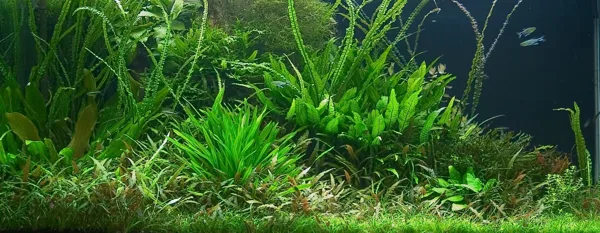
A small aquascape asks you to notice proportions. One stone can become a major feature, a leaf can hide the background and a fast-growing plant can occupy most of the scene. That is part of its appeal, but it also makes restraint useful. Begin with a plant-focused composition and a container you can maintain. Small does not mean easier in every respect: limited water volume leaves less room for changes in conditions and for equipment that was not considered at the start.
Choose the scale and the scope
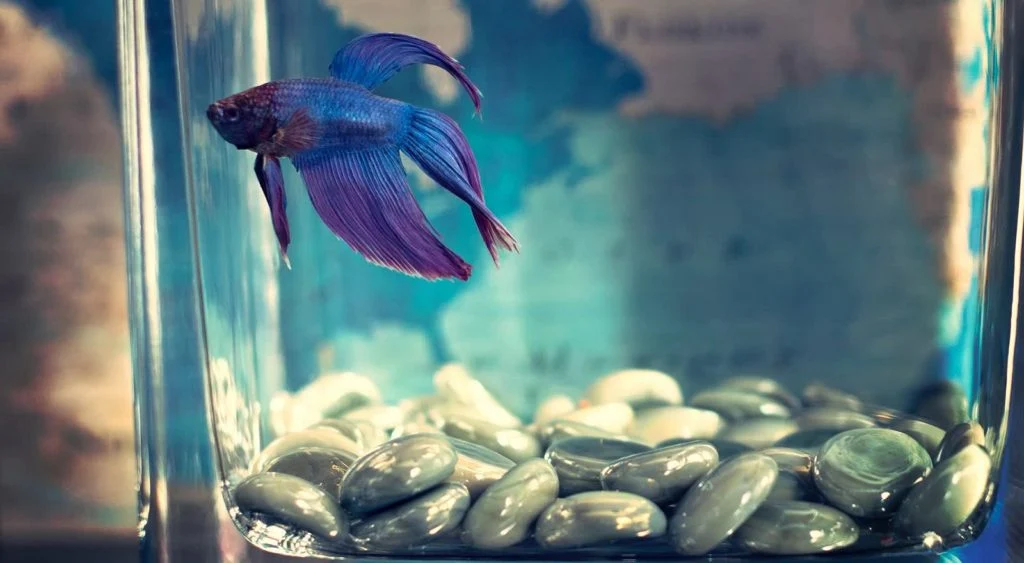
Decide whether the project is a planted display alone or an aquarium intended for animals. If animals are involved, their full needs take priority over the visual idea, and the tank must be suitable for them. Do not treat a tiny fish as a miniature decorative element or add animals because a gap in the scene seems empty.
Measure the internal usable space and draw a simple layout. Leave room for equipment, plant growth and maintenance. A slightly larger setup may be easier to manage than an extremely small one with no comfortable access.
Use one clear hardscape idea
Choose a main stone or piece of suitable driftwood and a small number of supporting elements. Keep their character related so the scene reads as one place. An open area can give the planting depth and make its growth more visible.
Test the arrangement before adding water. Check stability and avoid leaning heavy pieces against the glass in an unsuitable way. Use materials appropriate for aquariums, considering how they may affect water chemistry. Leave access to the parts you will need to clean; an impressive arrangement that traps debris beyond reach can become difficult to enjoy.
Select plants for their growth, not the sales pot
Read the identity, mature habit and growing requirements of each plant. Compact-looking young plants can become large or spread quickly. Choose a limited group whose light and care needs you can provide rather than combining everything sold for a nano display.
Place plants according to their growing habit. Some need root space in substrate, while others attach to hardscape and should not be buried in the same way. Keep room between the first planting and the final view you want. Trimming is part of aquascaping, but constant correction should not be the only thing keeping the layout visible.
Keep the technical system proportionate
Choose suitable lighting and any filtration, heating or circulation the setup requires. A regular controlled light cycle is more useful than leaving a lamp on whenever you remember. More intense light is not automatically better if the plants and nutrient supply do not support it.
Supplemental carbon dioxide is not essential for every planted aquarium. If a plan depends on it, use suitable equipment and informed guidance rather than improvising in a small volume. Start with plants whose needs match the level of management you want. Keep the first version simple enough that a change in growth is something you can interpret.
Fill gently and change one thing at a time
Set the substrate and hardscape, plant carefully and introduce appropriate prepared water without disturbing the arrangement. Check the equipment and observe the setup before considering any animals. A planted appearance does not establish that an aquarium is cycled or ready for stocking.
During the first weeks, record lighting, care and changes in the plants or water. If algae appear, investigate the conditions rather than adding several treatments at once. A controlled adjustment is easier to assess. Be prepared to remove or reposition a plant that clearly does not fit the space.
Make maintenance part of the finished scene
Keep the tools and access needed for trimming, debris removal and suitable partial water changes. Watch how the plants alter the view as they grow. Take photographs from the same angle to see whether the composition is becoming fuller or merely more crowded.
Contain unwanted aquatic plants and follow local disposal guidance; do not release material outdoors. If a setup requires equipment or care the vessel cannot comfortably accommodate, increase the scale or simplify the planting. A small aquascape can be complete without animals and without a complicated plant collection. Its strength is in the detail you can still see.
Allow for sideways growth and displaced water
“Mini” can describe a leaf, a nursery portion or the height of a plant. It does not necessarily describe its eventual footprint. Tropica's profile of Anubias barteri Petite gives a plant height below 5cm while noting a rhizome that can extend 5–10cm or more. In a small scene, that sideways spread matters as much as the height. Keep the rhizome exposed when attaching it to suitable hardscape.
Use a measured sketch before assembling the scene. An illustrative rectangular vessel measuring 30 by 20 by 20cm internally contains 12 litres only if filled to that full height and left empty. A lower waterline, substrate and stones reduce the usable water. If they displace an assumed two litres, the remaining volume would be ten, but measure the water actually added instead of treating that assumption as a specification. None of these figures establishes suitable accommodation for animals.
Place the main feature so it can be lifted through the opening if necessary. Then check the maintenance route: can you reach the glass behind it, remove a loose leaf and access any intake? A narrow gap that looks attractive from the front may become a debris trap you cannot clean.
For a first plant-only arrangement, one small attachment plant with a restrained hardscape can be a more revealing trial than several species crowded together. You can see whether it produces healthy new growth and how much its leaves shade the rest of the composition. Leave bare space deliberately rather than filling it with plants that will soon need moving.
Take a photograph at planting and another from the same angle after growth becomes visible. Compare the original outline with the living outline. If the feature is disappearing, identify the particular plant responsible and thin or reposition only what needs attention. A slow-growing plant does not need weekly rearrangement to make the project look active. The useful measure is a stable, accessible composition whose growth remains in proportion to the vessel.
Sources & further reading
This guide draws on horticultural and specialist references. Conditions vary with climate, cultivar, and site.
- OATA: Setting up a planted aquarium
- RSPCA: Suitable aquarium environments
- U.S. Fish and Wildlife Service: Classroom organism guidance
- Tropica: Anubias barteri Petite plant profile