In this guide
At a glance
- Choose first
- Herbs you use
- Group by
- Light, drainage and water
- Check hardiness
- Basil is tender
A herb garden is most useful when you can pick something while cooking without making an expedition of it. A few well-grown herbs near the kitchen can contribute more than a large collection planted for a photograph. Start with the flavours you use, then check what each plant needs. “Herbs” is a culinary category, not one set of growing instructions. Some want sharply drained sunny conditions; others appreciate more reliable moisture. Put those differences into the plan from the beginning.
Choose the herbs before the arrangement
Write down the herbs you regularly buy or wish you had to hand. Begin with a small selection you can use and look after. Check whether each plant is annual, biennial or perennial, and what conditions it needs in your climate.
Do not assume every familiar kitchen herb will stay outside through winter. Basil is tender, for example, while the suitability of other herbs depends on species, cultivar and conditions. Decide what you can grow reliably, what you want to sow again and what may need seasonal protection. This makes the collection more useful than a mixed tray bought without a plan.
Design around a week's cooking
Write down the herbs used in three meals you make regularly, including roughly how much you need at once. A few chive leaves for eggs and a large handful of basil for sauce make different demands on a planting. Grow a modest trial around those meals before turning the whole patio into a herb collection.
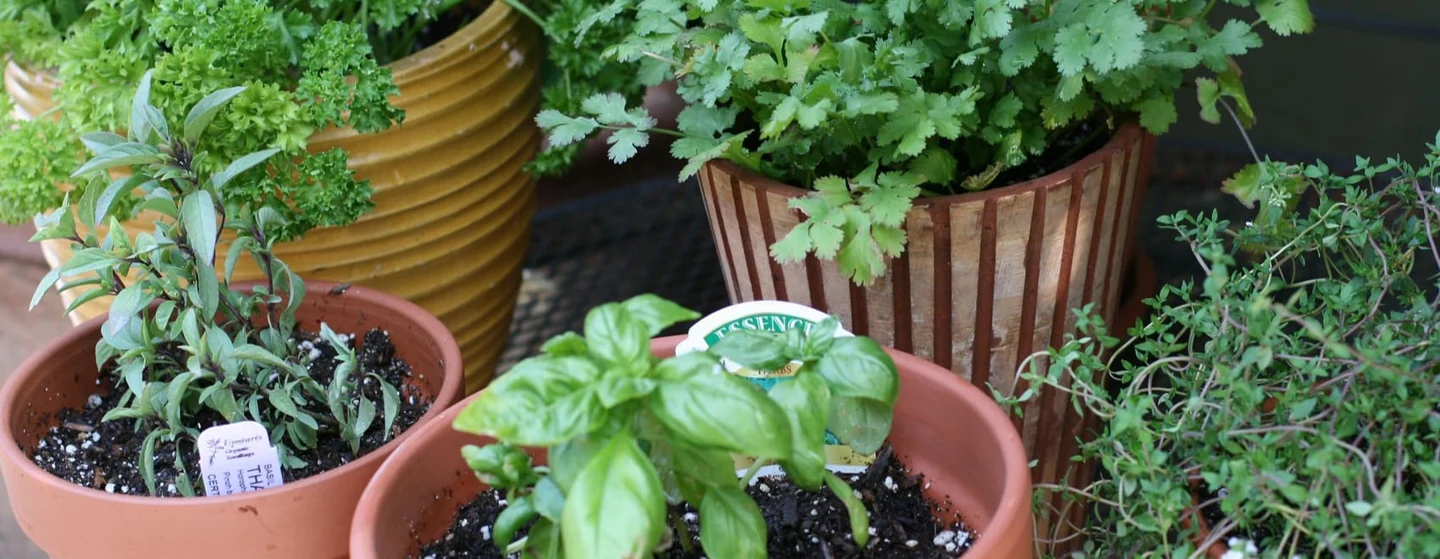
For an illustrative first arrangement, keep three or four labelled containers close enough to harvest easily, but separate enough to water individually. A thyme pot, a parsley pot and a contained mint can form one visual group without sharing the same root conditions. Their actual container sizes must follow the plants' mature needs; three identical small pots are not a horticultural requirement.
Leave somewhere to set down scissors and a harvest bowl. Keep plant labels readable after foliage fills out, especially where different varieties look similar. A garden used by several cooks benefits more from clear identification and reach than from an intricate arrangement that only its designer understands.
Group plants by needs, not by label
Sunny, well-drained conditions suit herbs such as thyme, rosemary and sage, but that does not make the same watering and soil treatment right for the entire herb garden. Read individual growing guidance before sharing a container.
Use separate pots when needs differ or a vigorous plant would dominate. Mint, for example, is easier to manage when its spreading growth is contained and checked. Grouping pots visually can still give the effect of one garden while allowing you to water and maintain each plant appropriately. Compatibility matters more than making every rootball fit into one attractive bowl.
Put harvesting within comfortable reach
Position the collection where suitable light and convenient access overlap. A sunny place near the kitchen door can be ideal if it also works for the plants. Leave enough room to approach with a watering can and to harvest without stepping into the bed.
An outdoor bed, a raised planter or a few containers can all work. Choose the arrangement for your space and mobility rather than assuming a formal herb wheel is necessary. If herbs are grown on a balcony, take account of structural limits, secure placement and drainage. The display should make cooking easier without making routine care awkward.
Prepare a root space that suits the plant
Use containers with drainage and enough volume for the mature plant. A tiny decorative pot may be a temporary display rather than a long-term growing space. Select a suitable growing medium, and avoid giving every herb the same rich, moisture-retentive mixture without checking its requirements.
If planting into the ground, assess the soil and improve or adapt the planting area as appropriate. Water after planting and continue checking moisture while roots establish. Once established, different herbs will still need different attention. Feeding is not an automatic answer to slow or weak growth if the position or watering is wrong.
Sow and harvest for continued use
Follow species-specific guidance for sowing and picking. Annual herbs that quickly run to seed may benefit from successive sowings so that one ageing plant is not your entire supply. Keep a record of when you sowed and how long the useful harvest lasted.
Harvest without stripping the plant beyond its capacity to recover. Use suitable pruning methods for woody herbs rather than treating them like soft annual growth. Let a few appropriate plants flower where you enjoy the display or want visiting insects, while recognising that flowering can change the usefulness of some herbs for leaf harvesting.
Distinguish a finished crop from a failing one
Some herbs are grown for leaves, others for seed, and the same plant may offer both at different stages. Minnesota Extension identifies parsley, coriander, dill and their relatives as herbs grown for foliage and seeds. Decide which harvest matters to you before removing flower stems or pulling up an apparently finished plant. Coriander going to seed is not the same event as a perennial thyme becoming unhealthy.
For short-lived leaf crops, try a small repeat sowing when the earlier batch is established, following the seed packet and local growing conditions. Observe whether you used the first batch before sowing another. Too many simultaneous seedlings merely move the glut into several pots.
Label preserved herbs with their identity and date, and choose the preserving method for the herb and intended dish. Minnesota Extension describes both drying and freezing; a dry, ventilated place and clear labels matter more than displaying bunches decoratively over a steamy cooker. Review the planting at the end of the growing period: keep the herbs you picked repeatedly, reduce the ones you admired but never used, and adjust quantities before adding more varieties.
Be realistic about the windowsill
An indoor herb collection needs enough useful light, suitable temperatures and workable watering. A kitchen window is not automatically the right place for every herb, especially during low-light months or beside strong heat. Start with a plant that suits the available conditions and watch its growth.
Review the collection after a season. Keep the herbs you use and replace the ones that repeatedly struggle or go unpicked. A garden built around three dependable favourites can be more generous in everyday life than a crowded collection of possibilities. Leave room to add something new when there is a clear reason to grow it.
Sources & further reading
This guide draws on horticultural and specialist references. Conditions vary with climate, cultivar, and site.
- RHS: Growing herbs
- RHS: Herbs in containers
- RHS: Propagating herbs
- University of Minnesota Extension: Growing herbs in home gardens