In this guide
At a glance
- Plan first
- Cooking and serving route
- Check
- Appliance installation requirements
- Utilities
- Qualified installation
An outdoor kitchen earns its space when it makes cooking outside easier. A place to put down a tray, somewhere to prepare food and a route back to the indoor kitchen can matter more than another appliance. Before drawing a long run of cabinetry, think through the meal you actually want to make there. You may need a compact cooking station, not a second version of everything indoors. That distinction can save space, upkeep and a considerable amount of work.
Start with a meal and a route
Imagine carrying ingredients out, preparing them, cooking and bringing the finished food to the table. Note where you need a clear surface and where people will pass. Keep the main circulation route separate from the hot cooking area so guests do not have to squeeze past it.
Put dining close enough to be convenient while leaving the cook workable space. If the outdoor area is far from the house, consider how water, food, dishes and waste will move between them. A layout that looks impressive but involves constant trips through a narrow doorway may be less useful than a simpler station nearer the kitchen.
Give raw and ready-to-eat food different landing places
Walk through a specific meal with empty trays before drawing cabinetry. Bring one tray out as though it holds raw food; place another where cooked food will leave the appliance. Now add salad, clean utensils, a serving dish and someone asking for a drink. If all of those actions depend on the same small patch of worktop, the arrangement needs either a clearer sequence or another suitable surface.
FDA guidance stresses keeping raw food separate from cooked food and using clean utensils and plates. Build that practice into the layout: have a deliberate destination for the used raw-food tray and a clean place for food leaving the grill. A large worktop is only helpful if clutter does not erase the separation.
This exercise does not establish appliance clearances. Mark the specified heat and installation zones first, then test the food route within the space that actually remains.
Choose the features you will use
Decide on the cooking method first, then design around the appliance's actual requirements. A grill, pizza oven and side burner do not have identical installation, clearance or ventilation needs. Follow the manufacturer's instructions and obtain professional advice where the installation calls for it.
Add a sink, refrigerator or built-in storage only if it resolves a real need. Each addition brings cost, cleaning and potentially utility work. A dry preparation surface and accessible storage for a few suitable utensils can provide a great deal of convenience without turning the project into a complete second kitchen.
Decide which services are worth maintaining
| Feature | Problem it can solve | Question before adding it |
|---|---|---|
| Preparation surface | A clean, accessible landing area | Can raw and ready-to-eat tasks remain separated? |
| Sink | Convenient washing where properly supplied and drained | How will potable supply, wastewater and winter shutdown be handled? |
| Refrigerator | Cold storage close to the cooking | Is the appliance rated for the conditions and will safe temperatures be checked? |
| Enclosed storage | Keeping suitable utensils nearby | What is actually protected from damp, pests and weather? |
For a small station beside the indoor kitchen, carrying ingredients out immediately before cooking may be simpler than maintaining outdoor refrigeration. For a distant entertaining area, the carrying route and safe cold storage deserve more attention. Neither choice makes food safe by itself: storage conditions and handling still matter.
Provide a practical handwashing arrangement with soap and safe water, rather than assuming a decorative rinse bowl serves the same purpose. Clean surfaces and equipment according to their requirements. After testing the complete meal routine, add the feature that removes a demonstrated problem. An unused sink or appliance consumes cleaning time and winter preparation even when it contributes little to supper.
Place heat and smoke deliberately
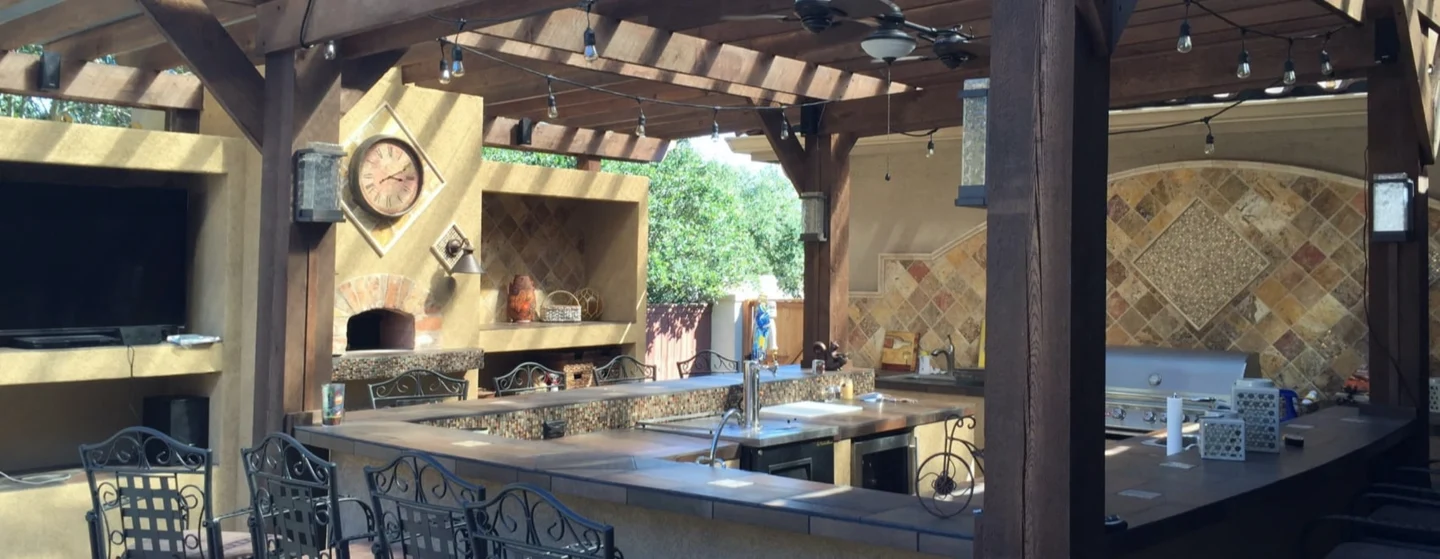
Use outdoor cooking appliances only in the locations for which they are designed. Keep the installation clear of combustible materials, eaves and overhanging planting in accordance with the appliance instructions and applicable local requirements. Do not enclose an outdoor grill as if it were an indoor cooker.
Consider prevailing wind and where smoke may travel, including towards doors, neighbours and seating. Leave a safe area around the cooking zone and keep children and pets away while it is in use. A roof or pergola is not merely a styling choice above heat; its suitability must be assessed as part of the whole installation.
Select materials for the conditions
Worktops, cabinets, fittings and appliances need to suit outdoor exposure and the intended use. A surface that is attractive in a showroom may become very hot in sun, mark easily or need more maintenance than you expect. Check the product's stated suitability, cleaning instructions and limits.
Keep the palette connected to the rest of the garden. A restrained combination of materials can make a modest station feel integrated rather than temporary. Avoid assuming that “outdoor” means waterproof in every situation. Plan protection and storage around the actual specifications, especially where frost, driving rain or coastal conditions are relevant.
Resolve utilities before construction
Permanent gas, electrical, water and drainage connections need appropriate professional design and installation. Confirm local requirements before work begins. Keep access for isolating, inspecting and maintaining services, and decide how the installation will be managed through periods when it is not in use.
Think about lighting as a practical part of cooking. The work surface and controls should be visible after dark without shining uncomfortable light into the dining area. Use suitable outdoor equipment installed appropriately. Test the layout with temporary furniture and the proposed appliance dimensions before fixing the permanent elements in place.
Allow for cleaning and the off-season
Provide a sensible place for waste and a way to clear dishes without crossing the hot zone. Clean cooking equipment according to its instructions, and do not leave it unattended while it is operating. Plan where movable items will go when the weather changes.
If you are unsure how much outdoor cooking you will do, begin with a suitable freestanding setup and a useful preparation surface. A season of use will show whether a sink or additional storage would make a meaningful difference. Build the permanent version around those observations, so the kitchen supports your habits instead of demanding new ones.
Sources & further reading
This guide draws on horticultural and specialist references. Conditions vary with climate, cultivar, and site.
Our editorial standards →