In this guide
At a glance
- Check first
- Load, rules and secure fixings
- Assess
- Direct sun and wind
- Keep clear
- Doors and everyday access
A balcony feels bigger when it has a clear purpose. A chair beside herbs you can reach from the kitchen can be more inviting than a dense line of pots around every edge. Before bringing plants home, stand in the space with the door open and imagine sitting there, watering it and carrying things through. The best balcony garden makes those ordinary movements easy. Greenery should improve the place you use, rather than gradually occupying all of it.
Check the space before filling it
Confirm building rules and the balcony's suitability for the proposed load before adding heavy containers, screens or raised beds. Wet compost, water and mature plants all contribute weight. Do not infer that a balcony is suitable simply because a neighbour has large planters.
Measure the floor, the door swing and the space needed to move a chair. Keep access clear and place containers where they will not topple or drop objects onto people below. Fixings need to suit the structure and any relevant building requirements. Substantial changes deserve advice from somebody qualified to assess them.
Find out what the plants will experience
Observe sunlight at several times of day. A balcony can be bright without receiving much direct sun, while an exposed corner may be much hotter and windier than it looks through the glass. An overhead balcony can also keep rain away, so outdoor pots do not necessarily get watered by the weather.
Start with a modest group of plants suited to those conditions. A sheltered shady balcony needs a different selection from a sun-baked one. Choose for the climate and exposure as well as appearance, and use a season of observation to decide which parts of the planting deserve expansion.
Use fewer containers, more deliberately
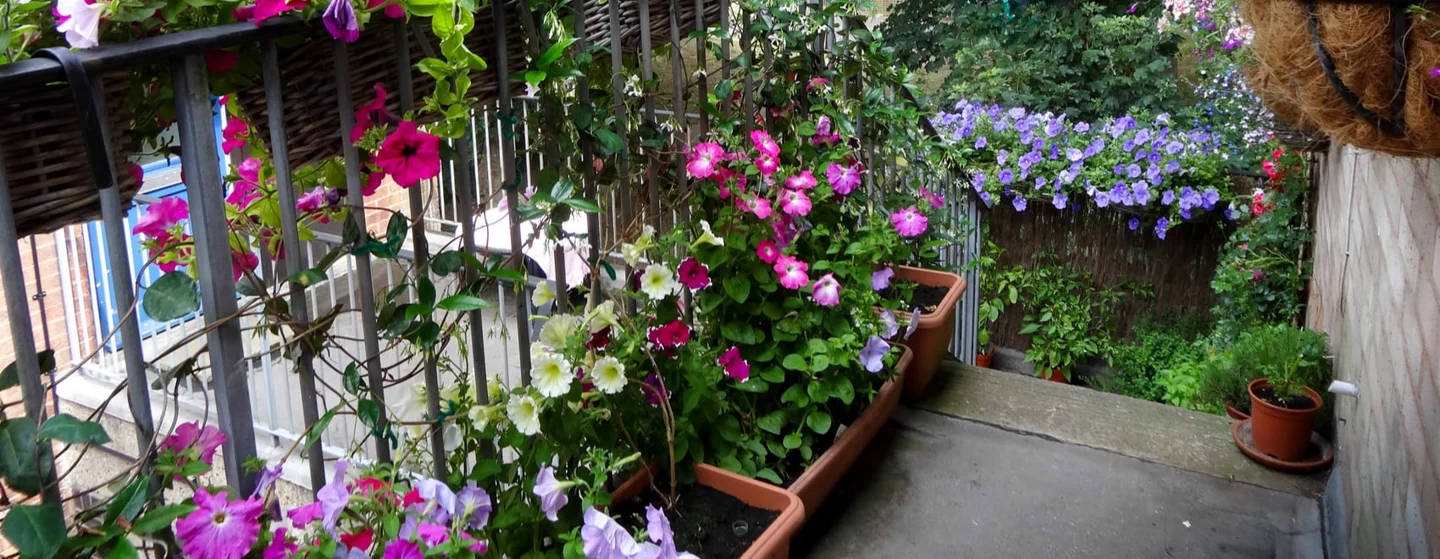
A group of containers can frame a seat, soften a blank wall or give the view from indoors a little depth. Repeat one material or colour to connect pots of different shapes. Larger volumes of compost are generally easier to manage than a collection of tiny pots, but their weight must be appropriate for the balcony.
Use containers with drainage and a suitable potting medium. Arrange them so excess water can escape without creating a nuisance or leaving the balcony surface constantly wet. Avoid hiding every pot behind another: the ones you cannot reach comfortably are likely to be the ones you forget to check.
Give every container a job
Consider a hypothetical balcony 1.5 metres deep and 3 metres long. Sketch the open door, a chair with someone sitting in it, and the route to the far end before allocating the remaining floor to pots. Those measurements do not establish a safe load or a required escape width; they simply make the tradeoff visible. A row of pots that fits when the chair is folded may be impractical when you actually sit outside.
One foliage container beside the seat, one seasonal container seen through the window and one small edible grouping can be a more legible starting point than a pot along every available edge. Keep a container only if you can explain what it contributes and reach it for care. Avoid placing climbable furniture or planters where they compromise the function of a balcony guard.
Keep height useful and secure
Vertical planting can add privacy without using the entire floor, provided the wall or support can safely carry it. Keep planters within comfortable reach for watering and maintenance. A tall green screen that blocks the only light or turns into a wind-catching sail creates a new problem.
Where a suitable screen is permitted, filtered shelter can be more useful than a solid barrier. Choose climbers for their mature size and intended support; a vigorous garden climber is not automatically a sensible balcony plant. Leave access behind or beside the display so you can inspect ties, growth and the structure.
Grow something you will actually use
Herbs close to the kitchen can make a small garden feel rewarding. Choose the ones you cook with, then check that each suits the light available. Give plants with different watering needs separate pots rather than combining them solely because the leaves look good together.
Vegetables need realistic space and attention. Start with one crop whose requirements you can meet instead of trying to reproduce a whole allotment. Consider the container volume, support and harvesting access as well as sunlight. A small successful harvest is a better introduction than several crowded plants competing for the same resources.
Make watering part of the layout
Put the plants you check most often where you can see them from the door. Keep a watering can somewhere convenient, and arrange a plan for periods away from home. Hot wind can change the needs of a container quickly, so inspect the compost rather than relying on a fixed weekly timetable.
Leave one comfortable place for yourself. Test it with a cup, a book and the door open. If the chair has to be folded every time you water, remove a pot or change the arrangement. A good balcony garden should be something you can step into, not simply look at from indoors.
Solve the water journey, including the overflow
RHS container guidance recommends checking moisture below the surface: light showers can leave the lower rootball dry, while a dry-looking surface alone can be misleading. Check an accessible part of the growing medium without damaging roots, then water according to the plant and container. Larger containers offer more moisture buffer, but their wet weight still needs approval for the site.
Walk through the whole task with an empty can. Can you fill it, carry a manageable amount, reach the back pot and empty collected runoff without lifting a heavy planted container? A tray is useful only when it can be inspected and emptied; it must not create a permanent waterlogged root zone. Keep water out of door tracks, away from vulnerable finishes and within the building's drainage rules.
Before a trip away, rehearse the actual arrangement with whoever will care for it. Label exceptions such as the drier pot, rather than asking them to give every plant the same daily drink. If no one can reach the plants safely, reduce the display before adding an irrigation system.
Sources & further reading
This guide draws on horticultural and specialist references. Conditions vary with climate, cultivar, and site.
Our editorial standards →