In this guide
At a glance
- Choose by
- Habit and mature size
- Position
- Sunny, suitable soil
- Pruning
- Depends on rose type
A rose beside a seat can change the whole reason for sitting there. Fragrance becomes something you notice while reading, and a climbing stem can soften the edge of an otherwise ordinary wall. The practical decisions matter just as much as that first impression. A rose that overwhelms its support or reaches across the path will need constant negotiation. Start with the place and the space available, then choose the rose that can belong there.
Find a site that suits the plant
Roses generally perform best in a sunny position with fertile, moisture-retentive soil that drains well. A poor, very dry or waterlogged spot is not a promising starting point. Check your local climate and the specific rose's requirements rather than relying on a single rule for every variety.
Think about air movement and access as well as sunlight. Leave space to reach the plant for tying in, pruning and routine inspection. A rose garden can be a dedicated bed, a mixed border or one well-chosen container; the smallest version still needs appropriate conditions.
Choose the habit before the colour
Shrub roses, climbers, ramblers and compact patio forms do different jobs. Read the mature size and growth habit, then compare it with the site. A large rambler may be wonderful over a substantial structure and entirely wrong for a narrow arch beside the back door.
Check whether the rose flowers in one main flush or repeats, and decide which matters to you. A short but generous display can be worth making room for, especially if neighbouring planting carries the rest of the season. Fragrance is another selection criterion, but it belongs beside health, suitability and size rather than replacing them.
Create a view, with enough room around it
A group of compatible shrub roses can make a clear statement in a border, while one rose repeated at intervals can connect a longer space. Use foliage and neighbouring plants to give the flowers a background. A little restraint makes individual forms easier to appreciate.
Position fragrant roses where you can encounter them comfortably, without thorny stems narrowing a route or brushing against a chair. In a mixed border, do not crowd their bases simply to hide bare stems. Allow each plant the room its mature size requires, and keep practical access visible on the plan.
Give climbers support from the beginning
Install an appropriate, securely fixed support before the rose grows into the space. Check how wide the structure is, how it will be maintained and whether there is room to tie in stems. A light decorative arch is not necessarily suitable for a vigorous mature plant.
Use the rose's growth to shape a view rather than treating every available surface as something to cover. Framing a doorway, giving a boundary height or creating a pause along a path can be enough. Keep pruning and training advice specific to the type of rose; climbers and ramblers should not be treated as interchangeable.
Plant according to the rose and the climate
Use the supplier's instructions for planting depth and the local conditions for timing. Bare-root and container-grown roses have different practical planting windows. Avoid working frozen, waterlogged or very dry ground, and prepare a hole that accommodates the roots without forcing them into a tight shape.
Spacing depends on the rose's habit and eventual size; a single distance cannot suit every cultivar. Water after planting and continue checking moisture while the plant establishes. Where roses have previously grown, investigate replant problems before simply replacing one with another in the same hole.
Plan for the rose after the petals fall
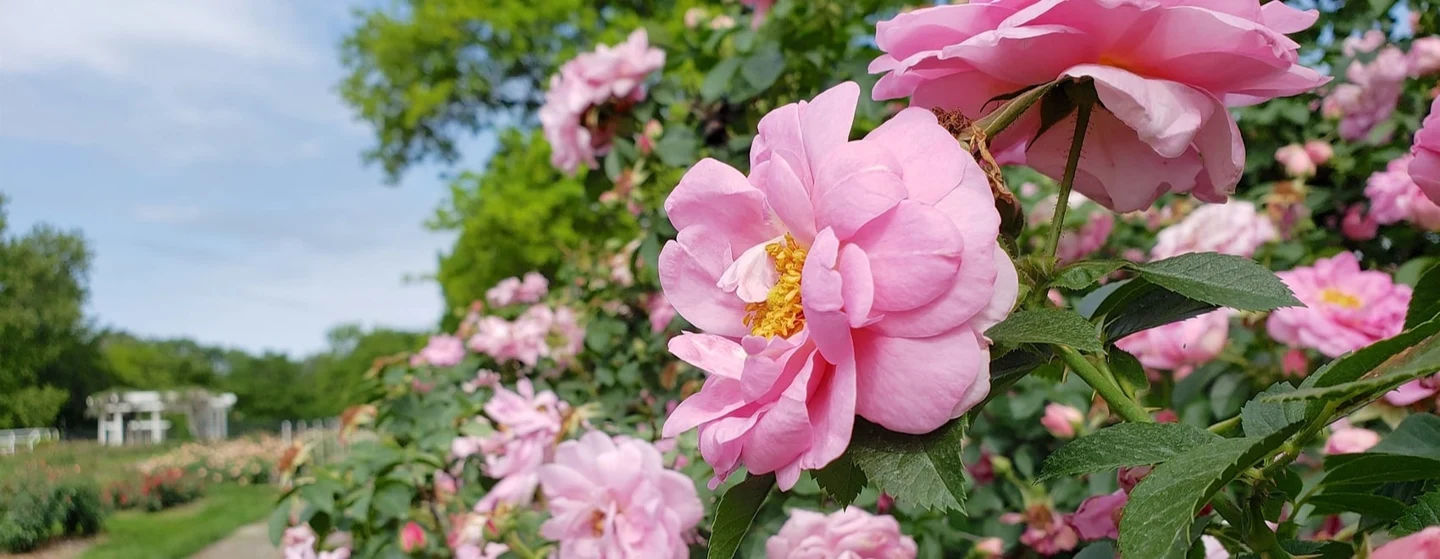
The useful rose-garden photograph is not always the one taken at peak bloom. Look at established roses later in the season, when foliage condition, width and bare stems are easier to assess. A cultivar that performs well near you gives better information than a perfect close-up from a very different climate.
Ask a local public garden or rose society which cultivars keep acceptable foliage under their actual care routine. If a display depends on intensive treatment, decide whether that fits your own gardening. Disease resistance is a selection advantage, but the RHS black spot guide explains that changing fungal strains can overcome it. A resistant label is a reason to investigate, not a lifetime guarantee.
Build maintenance access into the composition. You need to see lower leaves, reach ties and remove affected debris without pushing through a thicket of companion plants. Groundcover can soften the front of a rose bed while leaving access points behind it. Think of those gaps as part of the design, rather than holes waiting for another plant.
For an existing bed that loses leaves, take a wider photograph before treating individual spots. Record whether the same cultivar suffers repeatedly, which neighbours remain healthy and when symptoms begin. Black or purple leaf markings followed by yellowing and early leaf drop fit black spot, but other rose problems need different identification. The RHS notes that sanitation can delay disease without excluding spores arriving from elsewhere.
If one rose is repeatedly disappointing, replacement with a locally better-suited cultivar can be a more useful design change than adding another layer of maintenance. Keep the same visual role—an upright accent, a fragrant shrub beside the seat, a repeated colour—while changing the plant that has to deliver it. The border can retain its character without requiring every rose to be permanent.
Make care part of the design
Plan for watering during dry establishment periods, suitable mulching and any feeding the plant needs. Keep mulch clear of the stems. Inspect growth so you can identify a problem early rather than applying treatments on a fixed calendar without a diagnosis.
Pruning varies with rose type and purpose. Identify the plant before cutting it, and follow guidance for that group. Leave room for the tools and the gardener as the bed develops. A convincing rose garden is not one that hides all the work; it is one in which the work is manageable enough that you still want to stop and enjoy the flowers.
Sources & further reading
This guide draws on horticultural and specialist references. Conditions vary with climate, cultivar, and site.
Our editorial standards →