In this guide
At a glance
- Plan for
- Adults and caterpillars
- Best starting point
- Local butterflies and host plants
- Plant selection
- Match sun, soil and moisture
A butterfly border can be lovely without looking like a collection of plants labelled as wildlife products. Think of flower clusters large enough to land on, repeated colours that hold the planting together, and something coming into bloom as another plant finishes. Then add the part that often disappears from the photograph: food for the caterpillars.
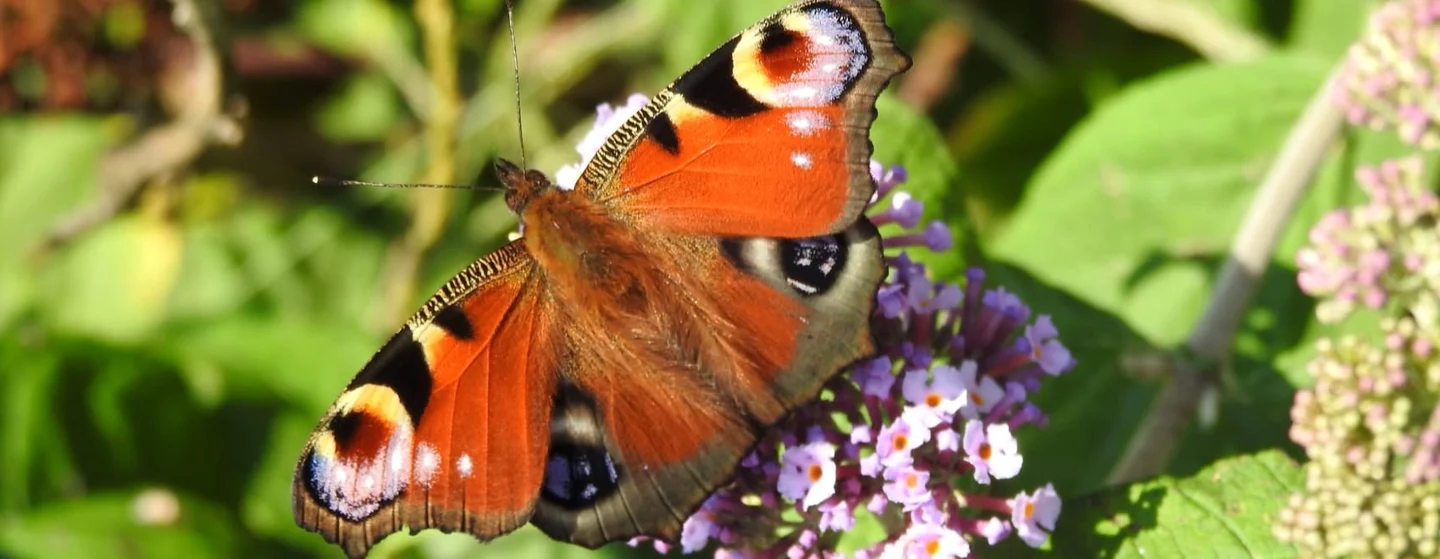
Adult butterflies and their young do not necessarily eat the same plants. Nectar flowers bring visitors; suitable larval host plants make room for the next generation. Start with the butterflies present in your region, then choose plants for your soil, sunlight and available space. A longer list of flowers is not automatically a better habitat.
Design the space before planting
Sketch the bed, container group or front-yard strip with its paths, seating and established plants. Mark where the sun falls and where wind funnels through. Keep a clear route for watering and observation, and place taller planting where it will not continually lean across a narrow walkway.
A small container group can use the same principles as a larger border: a coherent set of plants, flowers across the local season and a host plant suited to the available space. Choose large enough containers for the roots and watering demands, then group them so individual pots read as one planting. On a balcony, confirm structural loading and protect containers against wind before planning around them.
For a front garden, a neat edge can frame a more generous interior. Near a seat, leave room to watch without brushing through the flowers. Repeat a few plant shapes or colours to connect the design rather than filling every gap with a different species. The habitat should make practical sense when nothing is in full bloom.
Plant, establish and adjust
Remove persistent weeds and prepare the ground appropriately for the selected plants. Lay out plants at their mature spacing, water new planting while it establishes and keep competing weeds in check. Avoid adding rich soil indiscriminately to a site selected for plants that need leaner, well-drained conditions.
Use the first season to record flowering gaps and actual visitors. Check whether taller plants obscure shorter ones, whether the host plants have enough room and whether a path remains comfortable. A decorative butterfly box, stake or feeder does not replace those decisions. Make a few targeted adjustments as the garden develops instead of rebuilding it each year.
Make a sequence, not one summer moment
Walk around the intended site and note where sun falls through the day. A sheltered, sunny border suits many nectar-seeking butterflies, but some species use woodland edges and other habitats. The planting should fit the visitors you can actually support, rather than a worldwide selection assembled by flower colour.
Choose early, middle and late flowering plants, allowing for the local growing season. Plant in recognisable groups instead of scattering one of everything. Repeating a few dependable plants gives the border visual rhythm while making a resource easier for insects to find. Leave room for mature growth so the arrangement does not become a congested tangle after its first season.
Perennials for a temperate butterfly garden
Asters, coneflowers, black-eyed Susans, blazing stars and bee balms are useful starting points for many temperate North American gardens. Select species and cultivars suited to your region; a common name covers plants with different sizes and requirements. Where native species are available, check their local range rather than assuming that every North American plant is native to your state.
The moisture distinction deserves attention. Joe-Pye weed generally belongs with plants that appreciate more moisture, while yarrow and many sun-loving salvias suit better-drained positions. Combining them because all appear on a butterfly list can create a watering compromise. Let the site do some of the editing before the colour palette takes over.
Annuals can fill a useful gap
Zinnias, cosmos and sunflowers can provide a generous display while a permanent border establishes. Give them their required light and room, and use them where their height and spread fit the surrounding planting. Choose flower forms that insects can actually access; heavily doubled flowers may offer less usable nectar or pollen.
An annual in one climate may be a tender perennial in another. Lantana, for example, is not a sensible universal recommendation: its behaviour and environmental status depend on location. Check regional invasive-plant guidance before adding vigorous species, and do the same for butterfly bush. A wildlife label does not cancel an invasive risk.
Choose the right host plants
Milkweeds support monarch caterpillars, but a monarch-focused planting should use milkweed appropriate to the region and site. Other butterflies rely on quite different hosts, which may include violets, grasses, shrubs or trees. Use a local butterfly or native-plant resource to connect the insect to the plant rather than buying a generic host-plant mixture.
Place host plants where some leaf loss is acceptable. A tidy path edge can frame a looser patch behind it, so useful habitat and a deliberate-looking garden coexist. Do not spray caterpillars off the very plants intended to feed them. If an insect is unfamiliar, take a photograph and identify it before deciding that action is necessary.
Complete the habitat around the flowers
Include shelter from strong winds and safe sunny surfaces where butterflies can warm themselves. Damp ground can provide moisture and minerals; a deep bowl of open water is not the same thing. Avoid unnecessary broad-spectrum insecticides and keep spray drift in mind when choosing a planting site.
Leave some stems, twigs and leaf litter undisturbed where practical, since insects can spend less visible stages of their lives there. Complete autumn clearance may remove the habitat you spent the season creating. Make changes in manageable sections rather than stripping everything at once.
Watch which plants receive repeated visits and which gaps appear in the flowering sequence. Those observations are more useful than adding another fashionable flower every spring. A successful butterfly border is an attractive planting with an ongoing food supply and room for several stages of life, including the ones that chew the leaves.
Match a host plant to a butterfly you can support
Choose one locally occurring butterfly and trace its needs backwards before buying a host plant. Is the butterfly present in your region? Which plants do its caterpillars actually eat there? Can one of those plants grow well in the space available? A nectar-rich flower border cannot make those three questions disappear.
Penn State's host-plant examples provide a starting point for parts of eastern North America:
| Butterfly | Host-plant starting point | Garden decision |
|---|---|---|
| Monarch | Milkweeds, Asclepias species | Choose a locally appropriate species for your moisture and climate, rather than any plant sold as milkweed. |
| Black swallowtail | Golden alexanders and several carrot-family herbs | Decide which plants can be left to caterpillars instead of harvested completely for the kitchen. |
| Fritillaries | Violets | Retain suitable violets through their feeding season; a spring flower alone is not the whole resource. |
| Spicebush swallowtail | Spicebush and sassafras | Check mature size and growing conditions before placing a woody host in a small bed. |
These are regional examples, not a worldwide planting prescription. Check the butterfly species and accepted host species with a local conservation organisation or extension service. A common name such as “fritillary” covers multiple species, and a plant genus can contain species with very different suitability or invasive status.
Build the host into the maintenance plan. Mark its position on your garden sketch and tell anyone who weeds or sprays that leaf damage is expected there. Keep enough of a small herbaceous host that ordinary pruning or a kitchen harvest will not remove the whole resource. If a caterpillar is found, identify it before assuming it belongs to the butterfly you hoped to attract.
Use different notebook columns for adult nectar visits, eggs and caterpillars. One adult feeding visit is not evidence of breeding, while chewed host leaves without a visible caterpillar are only a clue. This gives the garden a more useful goal than a long shopping list: one verified host relationship, a plant that can thrive, and care that allows it to be eaten.
Sources & further reading
This guide draws on horticultural and specialist references. Conditions vary with climate, cultivar, and site.
- University of Minnesota Extension: creating a butterfly garden
- Penn State Center for Pollinator Research: plants for butterflies
- United States Botanic Garden: butterfly planting
- Xerces Society: yards and gardens
- Penn State Master Gardeners: butterfly gardening and host plants