In this guide
At a glance
- Simplest start
- A crop on a sturdy trellis
- Main constraint
- Root space and reliable water
- Before planting
- Install and secure supports
- Keep clear
- Paths, light and harvest access
A climbing bean on a well-placed support can give a small garden height, privacy and a useful harvest. A tower of tiny pots may give it a daily watering job. Both are vertical gardening, but they make very different demands on the person growing them.
The aim is to use height while keeping plants healthy and work manageable. Start with the space you need to move through, the light available and the amount of soil each crop requires. A vertical garden saves ground area; it does not make roots, water or mature foliage disappear.
Choose the simplest system for the job
Ground-grown climbers usually give roots the most room. A trellis, arch or firmly anchored frame lets the growth rise out of a bed while leaving the crop accessible. It is a useful first choice if you have a small patch of ground but very little floor space to spare.
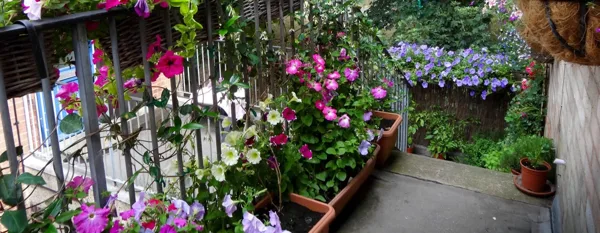
Large planters with supports work on patios and some balconies, subject to load limits. The container must suit the crop, not simply fit beneath a narrow trellis. Allow for the weight when wet, the height of the mature plant and wind catching the foliage.
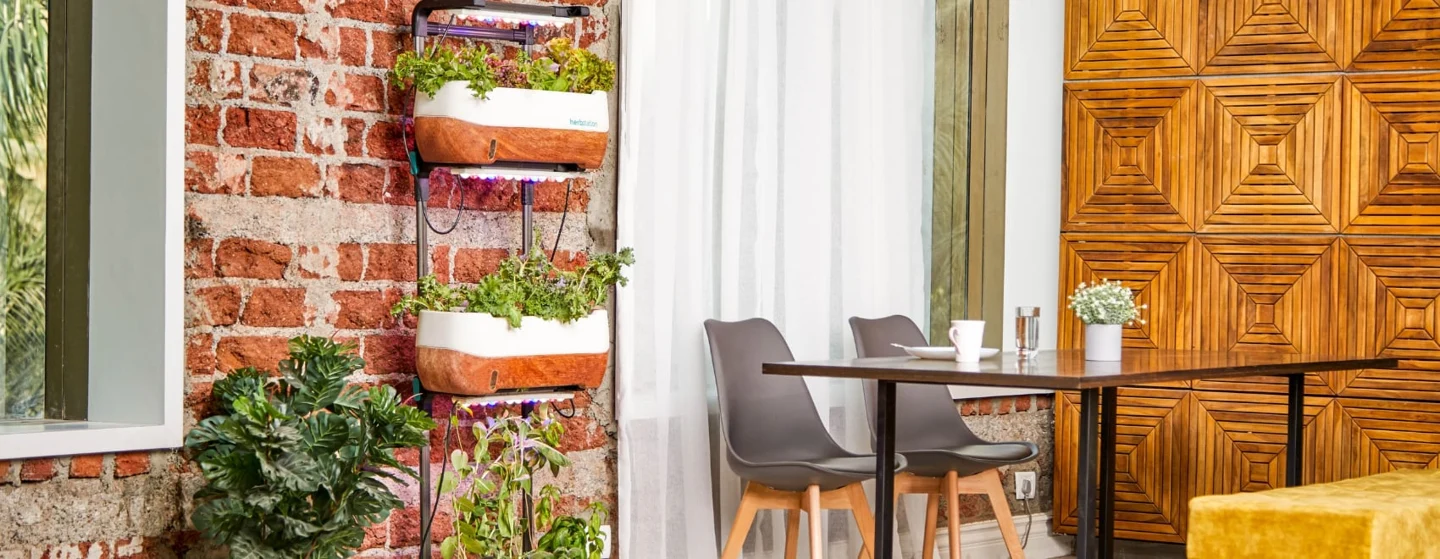
Stacked or wall-mounted containers can suit herbs, smaller leafy crops and ornamental plants. They also divide the available root space into little pockets that may dry at different speeds. Use them because the site and your routine suit the format, rather than because the number of planting holes looks impressive.
Match the crop to the support and soil volume
Climbing beans and peas naturally use supports, while vining cucumber varieties can be trained upward. A bush cultivar will not become a climber simply because a frame is nearby. Check the variety description before sowing, and leave enough spacing for air and light to reach mature leaves.
Herbs and salad leaves can be useful in containers, provided the crop has adequate light and root space. Keep moisture preferences in mind: a planting that combines a dry-loving herb with thirsty leafy greens may look tidy but be awkward to water well. Put frequently harvested plants where you can reach them without stretching over something fragile.
Strawberries can be displayed vertically, but a shallow gutter is not automatically a good permanent home. Judge the root volume, summer heat and irrigation available. Fruit hanging visibly over an edge makes harvesting convenient only if the plants behind it remain well supplied.
Position the height where it helps the rest of the garden
Mark the shadow a full-grown support will cast and think about the plants beside it. A screen of foliage may be welcome next to a sitting area but unwelcome over a sunny vegetable bed. Where possible, leave working room on more than one side of the structure.
Keep supports clear of paths and doors, including the growth that will spill beyond them. An arch needs enough headroom when covered, not just when newly installed. On exposed sites, a lighter-looking open frame can still carry a considerable wind load once its plants fill out.
Set supports in place before roots spread. Use appropriate ties where the plant needs help, leaving room for stems to thicken, and inspect them during the growing season. Match structural fixings to the surface and get advice where a tall or heavy installation exceeds straightforward garden work.
Support the crop you will actually harvest
A trellis has two jobs: carrying the vine and keeping the crop manageable as it develops. A frame that holds cucumber leaves may be a poor choice for a large pumpkin. Read the cultivar description before assigning a climbing crop to the narrowest available mesh.
University of Minnesota Extension's support guide makes the distinction practical. Small-fruited vine crops are better candidates for a home trellis than large squash or pumpkins. Some melons can separate from the vine when ripe, so developing fruit may need an appropriately fitted sling. That is a crop-specific measure, not a reason to wrap every cucumber in fabric.
| Crop or habit | What to plan |
|---|---|
| Pole beans and tall peas | A suitable climbing surface, with room to pick pods through the season |
| Vining cucumbers and small squash | A strong support and frequent checks that fruit is not trapped in the mesh |
| A suitably small trellised melon | Support for the fruit where the variety requires it, without constricting its growth |
| Indeterminate tomatoes | A sufficiently tall system and regular tying or training; a small decorative cage may be outgrown |
Install the support while roots and stems are small. Keep anchors clear of services and choose a structure appropriate to the mature crop and exposure; a planting guide is not a structural rating for a balcony or arch. Leave somewhere to stand with a harvest basket rather than covering the whole front of a bed.
As growth fills in, check the back of the trellis too. Pods and fruit can disappear behind foliage or become wedged between wires. Guide young growth gently before it hardens in an awkward position, inspect ties as stems thicken and remove finished crops without pulling the entire support out through neighbouring roots. Height saves useful space only while care and harvesting remain within reach.
Plan the watering route before adding more levels
Test how water reaches every container and where it drains. Upper levels can be missed by hand, while lower ones receive runoff they do not need. Drainage holes are essential, but dripping water still needs somewhere appropriate to go.
Use a suitable container growing medium, check moisture below the surface, and feed crops according to their needs and the medium used. A drip system can reduce repetitive work, though emitters still need checking. If you travel regularly, the garden needs a dependable watering arrangement before it needs another tier.
Repurposed containers should be clean, structurally sound and appropriate for their intended use. Avoid unknown treated materials for food crops, and do not assume an old pallet or household fabric will safely carry wet soil outdoors.
Start with one useful growing area
Try one supported crop or one manageable row of planters first. Record how quickly it dries, how much light the lower growth receives and whether harvesting stays comfortable. Expand the format that works rather than repeating its problems across a whole wall.
A good vertical garden feels generous without getting in the way. The leaves soften a boundary, the crop stays within reach, and the support remains an ordinary part of caring for the garden rather than a structure you spend the season working around.
Sources & further reading
This guide draws on horticultural and specialist references. Conditions vary with climate, cultivar, and site.
- RHS: Climbers, training and pruning on planting
- RHS: How to tie in climbers
- RHS: Green walls
- University of Minnesota: trellises, cages and fruit supports